
💧One Pump Range, Different Product Requirements
No two filling applications are exactly the same. From free-flowing liquids to thicker creams, gels and products containing small particulates, choosing the right metering pump depends on more than simply selecting the required fill volume.
UBA metering pumps are available in a range of configurations to suit different product characteristics, dosing requirements and production environments. Understanding the options available can help you identify a suitable setup for your application.
In this article, we’ll look at the main factors to consider when selecting a UBA pump, including valve configuration, fill volume, and pneumatic or servo-driven operation.
⚙️1. Choosing the Right Valve Configuration
One of the first considerations is the type of product being dispensed. UBA pumps are available with two distinct valve configurations: check valve and rotary valve. Each is suited to different product characteristics.
Check Valve Pumps
Check valve configurations are generally suited to free-flowing liquids with no suspended particulates. They are commonly used for lower-viscosity products, with applications typically extending to around 20,000 cps, depending on the product and operating conditions.
Examples of products that may be suitable include:
- Water-like liquids and solutions
- Fragrances and certain cosmetic formulations
- Cleaning products and chemical solutions
- Suitable pharmaceutical liquids
Rotary Valve Pumps
Rotary valve configurations are generally preferred for higher-viscosity products and applications involving suspended particulates. They can provide a more suitable solution for products that are difficult to handle with a conventional check valve arrangement.
Potential applications include:
- Thicker creams and gels
- Food sauces and pastes
- Any products containing suspended particles
The viscosity ranges are a useful starting point rather than an absolute rule. Product composition, particle size, operating conditions and the required fill volume can all influence the final choice.
Selecting the appropriate valve configuration is therefore an important part of assessing whether a particular UBA pump is suitable for your application.
🎯2. Selecting the Right Fill Volume
UBA pumps are available in different sizes, allowing the pump’s displacement to be matched to the required dose.
The fill volume is determined by the pump’s internal piston and sleeve dimensions, together with the selected stroke. Different plunger and sleeve sets can be used to accommodate different dosing requirements.
This is particularly useful for manufacturers handling several product sizes or working with different fill volumes across their production range.
When specifying a pump, it’s worth considering both the volume required today and whether other fill sizes may be needed in the future. Selecting an appropriate configuration from the outset can help avoid choosing a pump that is poorly matched to the intended application.
🔧3. Pneumatic or Servo-Driven Operation?
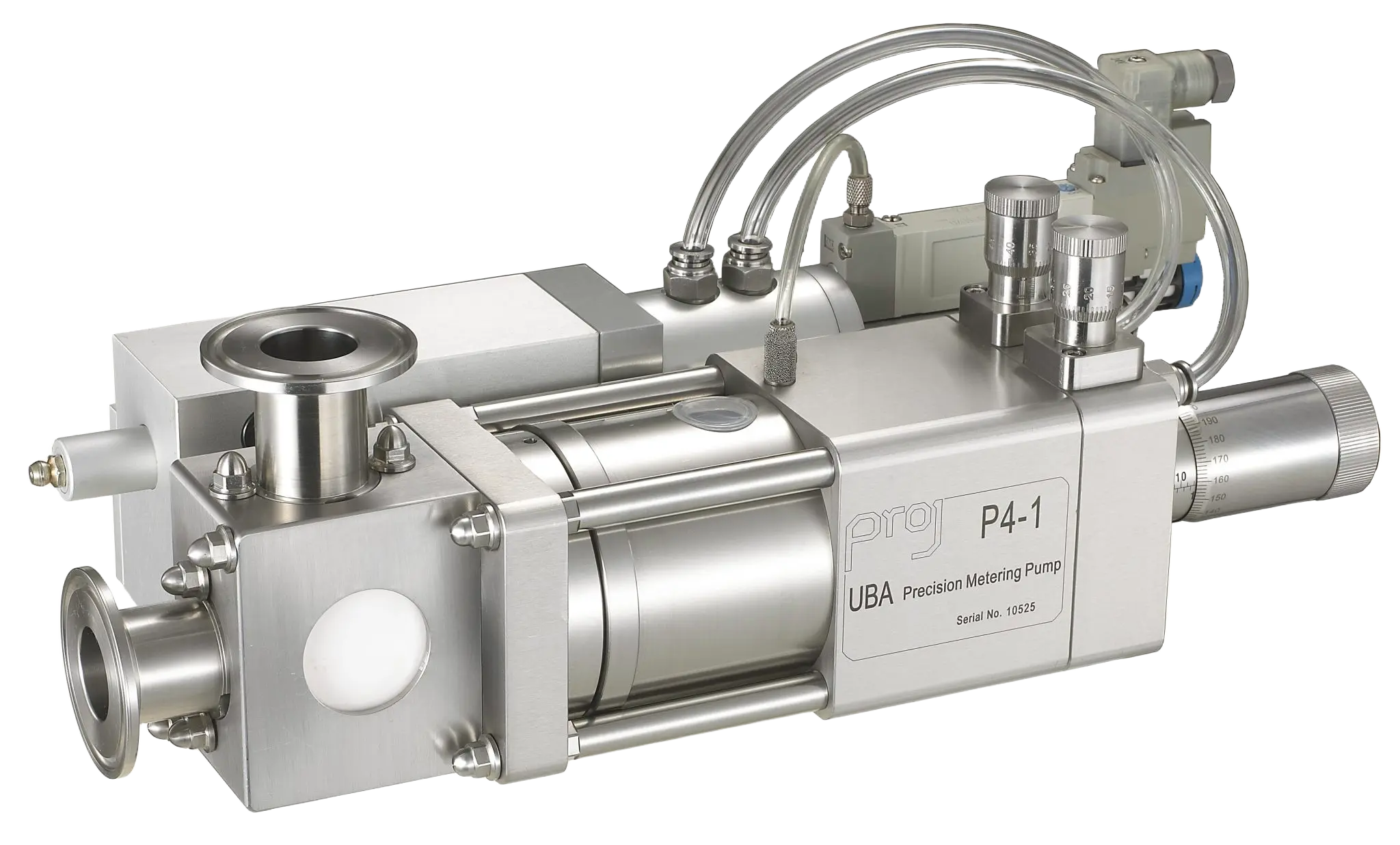
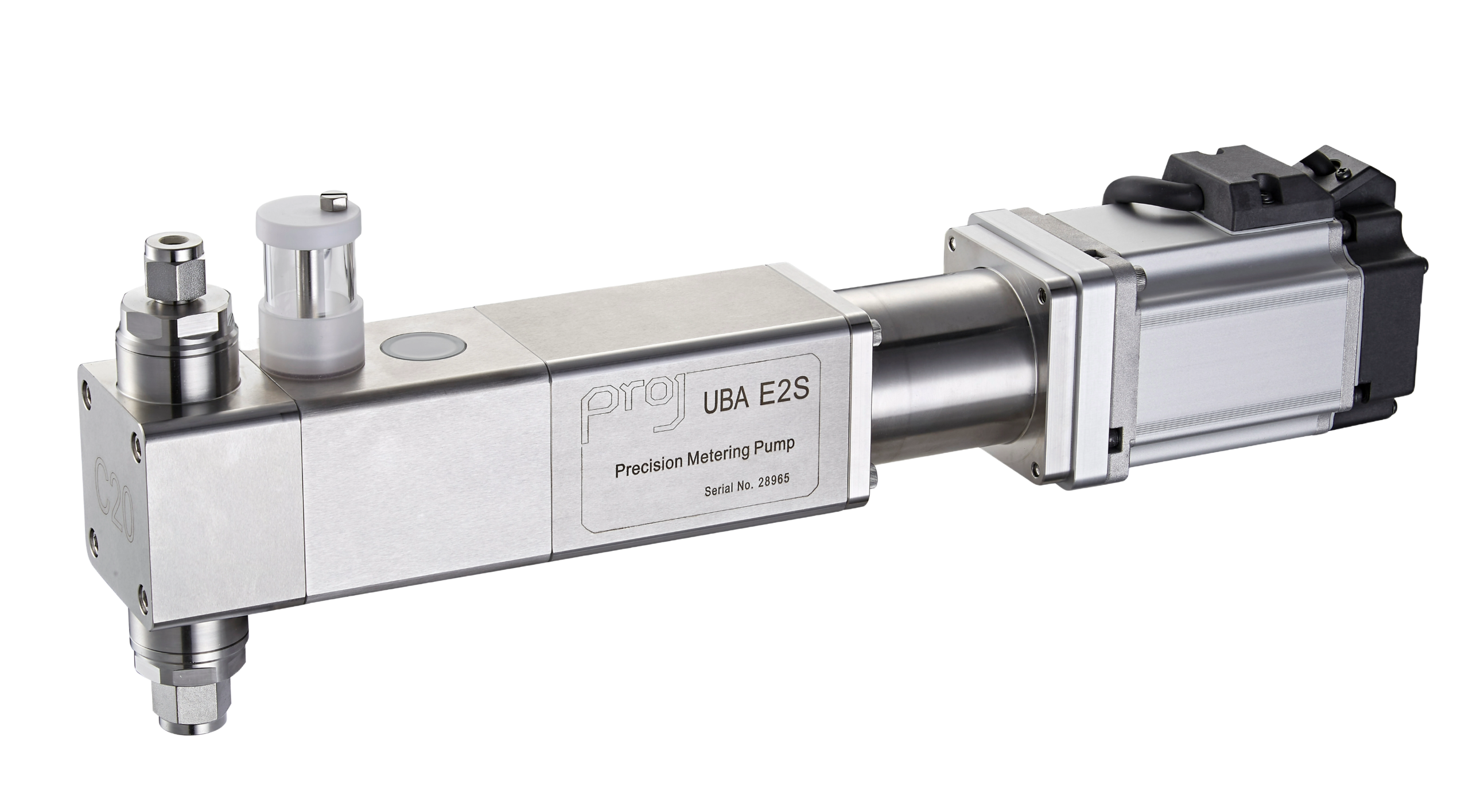
UBA metering pumps are available in pneumatic P-series and servo-driven E-series options. Both use the same underlying principle of volumetric dosing, but offer different approaches to pump control.
Pneumatic Pumps – P1 to P5
Pneumatic pumps use compressed air to drive the piston, with a micrometre adjustment block used to set the stroke and fill volume. Integrated needle valves allow the forward and return speeds to be adjusted independently.
They are a practical choice for both dedicated filling applications and production environments where different products or pump setups are used.
Servo-Driven Pumps – E1 to E5
Servo-driven pumps provide electronic control of the piston movement, offering greater programmability where the filling process requires it.
They can be particularly useful in automated production lines where electronic adjustment, control of the fill profile or communication with the wider machine control system is important.
The choice between pneumatic and servo operation depends on the requirements of the application and the level of control needed. Neither option is automatically the better choice for every product or production line.
🧪4. Considering Materials and Product Compatibility
The materials used in the pump’s product-contact parts are another important consideration.
UBA pumps can be supplied with different internal material configurations, including stainless steel and ceramic components, depending on the model and application.
Specialist seal-free ceramic versions are also available for certain low-volume dosing applications, with capacities up to approximately 60 ml per stroke. These use rotary valve configurations and may be worth considering where product compatibility requirements make conventional elastomeric seals unsuitable.
Material selection should always be assessed against the actual product and process requirements, rather than assuming one configuration will suit every application.
📋5. Finding the Right Configuration for Your Application
Selecting a metering pump involves bringing several factors together. Viscosity is important, but it is only one part of the picture.
When assessing a new application, it helps to establish:
- Product characteristics: viscosity, composition and whether particulates are present.
- Required fill volume: the dose needed for each container or product.
- Production requirements: the required output and how the pump will operate within the filling line.
- Control preferences: whether pneumatic operation is suitable or electronic servo control is required.
- Material compatibility: whether particular wetted materials or seal arrangements are needed.
Providing this information at the enquiry stage helps us assess the available options and identify a suitable pump configuration.
📩Need Help Selecting a UBA Pump?
At Hi-Tech Machinery, we supply UBA metering pumps for a wide range of precision liquid dosing applications. We can help you assess your product requirements, fill volume and production setup to determine which configuration is most appropriate.
If you’re considering a new filling application or looking to find a suitable pump for a different product, get in touch with our team to discuss your requirements.